
Free Consultation 716-222-2222
Speak to a Lawyer 24/7
Speak to a Lawyer 24/7
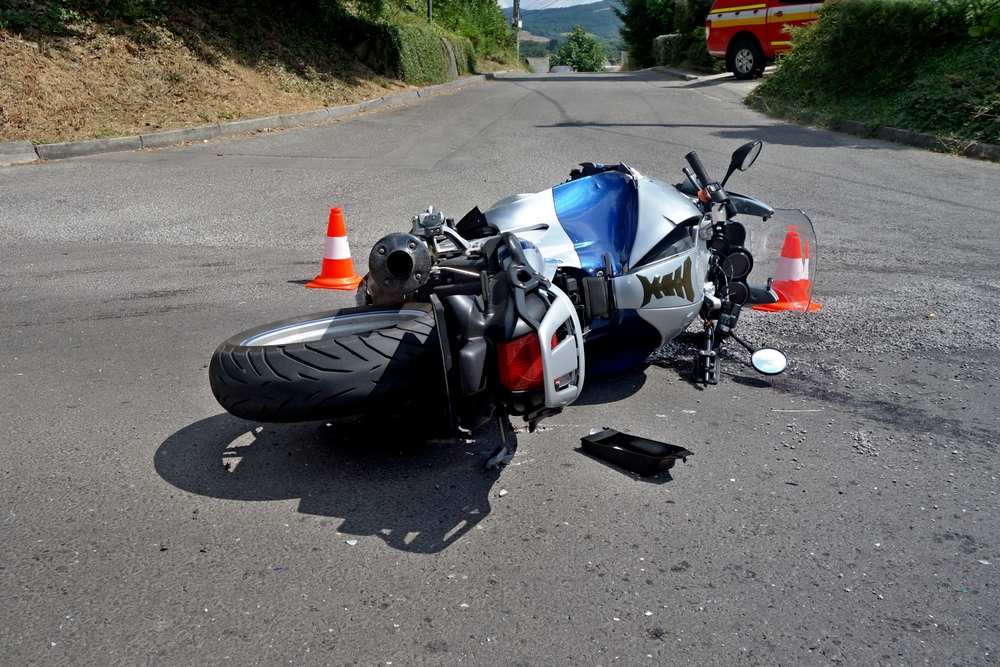
In Buffalo, New York, most motorcycle crashes involve collisions with other vehicles at intersections, most commonly a passenger car turning left into a rider’s path due to visibility issues, distracted driving, or speeding. Inexperience, alcohol impairment, and sudden loss of control from road hazards like oil or gravel are also frequent causes.
Understanding how many motorcycle crashes happen is the first step toward recognizing those dangers and knowing what legal options exist. O’Brien & Ford represents injured riders throughout Western New York, and our Buffalo motorcycle attorneys are ready to evaluate your case and pursue the full compensation you deserve.
Most motorcycle crashes on Buffalo’s roads follow recognizable patterns, and knowing where and how they occur is the first step toward determining who bears responsibility when a rider is hurt.
Intersection crashes are the most frequent and deadly scenario for motorcycle riders. A passenger vehicle turning left fails to register an approaching motorcycle, whether because of speed, angle, or inattention, and cuts directly into the rider’s path.
Because motorcycles are harder to spot and easier to misjudge, drivers rarely see them in time. When a failure to yield results in a collision, the rider absorbs the full force of impact with no structural protection and almost no room to react.
A driver who checks mirrors but fails to account for a motorcycle in a blind spot creates a side-impact risk with almost no warning. A sudden lane merge into an occupied space gives a motorcyclist virtually no room to react, and even glancing contact at highway speed can send a rider down.
These collisions are frequently attributed to driver inattention, and when that inattention is established, it carries direct implications for liability assignment.
Rider behavior also factors into crash causation. New York Vehicle and Traffic Law § 1252 requires motorcycles to operate in a single lane and prohibits overtaking in the same lane, making lane splitting outright prohibited in New York.
Riders who disregard that rule expose themselves to collisions with vehicles making sudden stops or unexpected lateral movements, and weaving through traffic without maintaining lane discipline raises the likelihood of a serious crash in much the same way.
Drivers who assume a motorcycle will yield or misjudge its speed at an intersection create the conditions for a direct collision. These scenarios are common in Buffalo’s older residential neighborhoods, where intersection signage varies, and sight lines are not always clear.
Fault in these cases often involves a simple determination of which driver failed to comply with New York traffic law.
Rider exposure shifts on two-lane roads and highways, where crash consequences tend to be more severe. Head-on collisions caused by a driver crossing the center line represent some of the most serious outcomes in motorcycle crash data, while tailgating on highways reduces the stopping distance available to a rider reacting to slowing traffic.
Buffalo’s mix of urban streets and rural Erie County roads creates frequent exposure to both scenarios, particularly during warmer months when motorcycle traffic increases.
For those wondering, “How do many motorcycle crashes happen?”, the answer often comes down to a recurring set of behaviors and conditions where legal responsibility is most frequently assigned.
Speed is a factor in a significant share of motorcycle fatalities, and New York enforces its consequences seriously. According to the New York State Governor’s Traffic Safety Committee, speeding penalties escalate based on how far a driver exceeds the posted limit, with surcharges and license consequences that increase sharply at higher speeds. Excess speed shortens reaction time and amplifies the force of every impact.
Impairment slows reaction time, narrows the field of vision, and compromises judgment, leaving one of the few remaining lines of defense against unpredictable traffic. When an impaired driver causes a crash that injures a motorcyclist, the legal path to compensation is typically more direct, but the physical consequences are no less serious.
New York requires riders to complete a motorcycle-specific road test or an approved safety course before operating on public roads. Riders without the proper endorsement carry a higher risk of losing control in emergency situations, and violations of those requirements appear regularly in crash reports involving inexperienced riders. The absence of a valid license can strengthen a negligence claim against an at-fault rider.
Even an experienced rider faces real danger when outside conditions work against them. Three factors in particular concentrate crash risk and shape the injuries that follow:
Without the structural protection of an enclosed vehicle, crashes arising from any of these conditions can result in neck and back injuries, spinal damage, fractures, or worse, with consequences that may affect a rider’s mobility and quality of life for years.
Please read: Understanding Road Rash from Motorcycle Accidents
Buffalo Personal Injury Lawyer. Choose the 2’s.
With over 80 years of combined experience, the Buffalo personal injury lawyers at O’Brien & Ford, PC are here to fight for the justice you deserve. Call us today at (716) 222-2222 to schedule your free consultation with one of our top-rated attorneys.
Prevention reduces risk but does not eliminate it, particularly when crashes stem from another driver’s conduct. Riders who follow consistent safety practices are better positioned to respond to hazards and support a legal claim if one becomes necessary:
These habits do not guarantee safety, but they establish a pattern of responsible riding that can carry real weight when fault is disputed after a crash. When another driver’s negligence is the cause, however, no amount of preparation changes what a rider is owed.
Know off-road injury risks: Read What Is an ATV Accident? to learn about common causes like rollovers and collisions, key liability issues, and steps to recover damages after an off-road crash.
Whether the crash involved a left-turn driver, a road defect, or an impaired motorist, understanding how do many motorcycle crashes happen is only part of the picture; holding the responsible party accountable is what follows. At O’Brien & Ford, our team helps injured riders across Western New York gather evidence, navigate insurance disputes, and pursue the compensation they may be entitled to under New York law. Call (716) 222-2222 today for a free consultation.
Chris O’Brien is a nationally recognized personal injury attorney with over 30 years of experience fighting for accident victims in Western New York. A founding partner at O’Brien & Ford, he has helped recover millions for clients and built a reputation as a top trial lawyer and educator. Chris is a Diplomate of the National College of Advocacy, a member of the Million Dollar Advocates Forum, and was named one of Western New York’s Top Ten Lawyers by Buffalo Business First. He lives in Amherst with his family and their Bernedoodle, Moose.
Years of experience: 33 years
Practice areas: Personal Injury Law, Car Accidents
Location: Buffalo, New York
Avvo | Super Lawyers | Best Lawyers | FindLaw


This page has been written, edited, and reviewed by a team of legal writers following our comprehensive editorial guidelines. This page was approved by Attorney Chris O’Brien, who has more than 33 years of legal experience as a personal injury attorney.
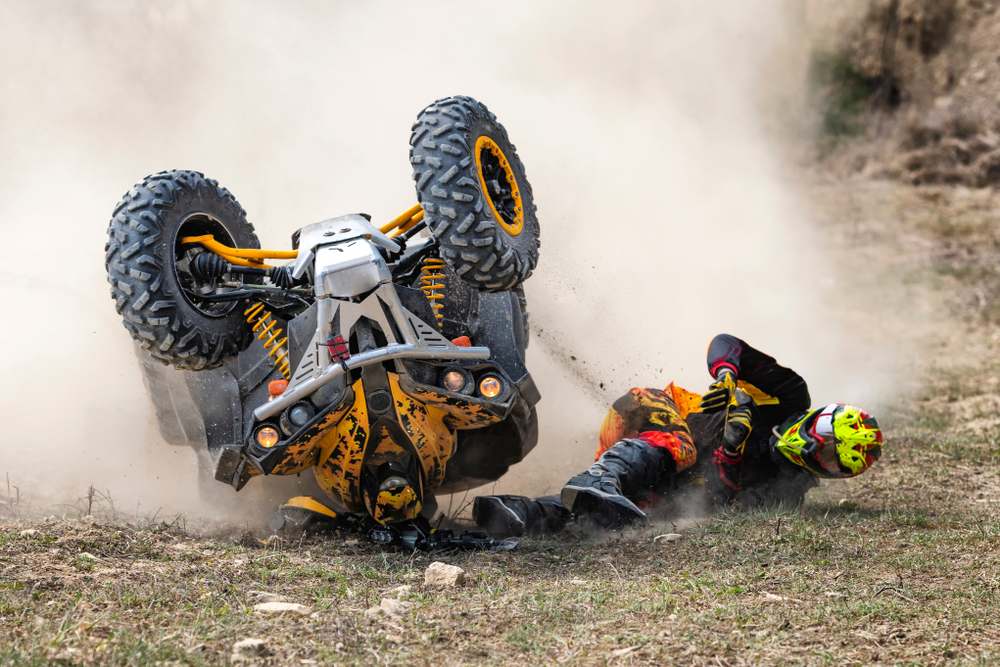
Key Takeaways ATV accident meaning covers any crash, rollover, or collision involving an all-terrain vehicle. New York classifies ATVs as motor vehicles, making these accidents subject to rep...
Posted by Chris O’Brien
Key Takeaways Lane splitting is illegal in New York and prohibited on all roadways. Motorcyclists must occupy a full lane and avoid riding between vehicles. Lane filtering and lane spl...
read morePosted by Chris O’Brien
Riding a motorcycle offers a sense of freedom that is hard to match. The connection to the road and the open experience draw riders back time and again. But motorcycles lack the basic protections...
read moreGet a Free Case Evaluation
If you or a loved one has been seriously injured, please fill out the form below for your free consultation or call us at (716) 222-2222

 716-222-2222