
Free Consultation 716-222-2222
Speak to a Lawyer 24/7
Speak to a Lawyer 24/7
Many drivers assume they know the basic traffic rules, but accidents often spark questions about unexpected details like footwear. This confusion often leads drivers to ask after an accident, “Is it illegal to drive barefoot in New York?” The answer is no. No state law bans driving without shoes. Yet this detail becomes critically important after a crash, when insurance adjusters search for any reason to reduce your compensation.
Although police officers cannot issue tickets solely for bare feet, barefoot driving may affect pedal control and reaction time. Insurers frequently raise these arguments when attempting to shift blame. O’Brien & Ford helps Buffalo drivers navigate these disputes by addressing how footwear choices factor into car accident claims and by pushing back when insurers rely on speculation rather than evidence.
No, New York law does not require drivers to wear shoes. New York regulates driving behavior through Vehicle and Traffic Law § 1212, which prohibits operating a motor vehicle in a way that unreasonably interferes with the safe use of the roadway. Because the statute focuses on vehicle control and safety, rather than clothing or footwear, driving barefoot does not violate any specific requirement.
For Buffalo motorists, this connection matters after a car accident. A police officer cannot issue a citation based solely on bare feet. Enforcement depends on whether a driver maintained proper control of the vehicle. If investigators believe a lack of footwear contributed to delayed braking or pedal slippage, footwear may be included in the analysis, even though no shoe requirement exists under state law.
Barefoot driving raises practical concerns for Buffalo drivers, particularly during winter or long commutes. Many people take off their shoes for comfort, but safety matters when navigating busy city streets and expressways.
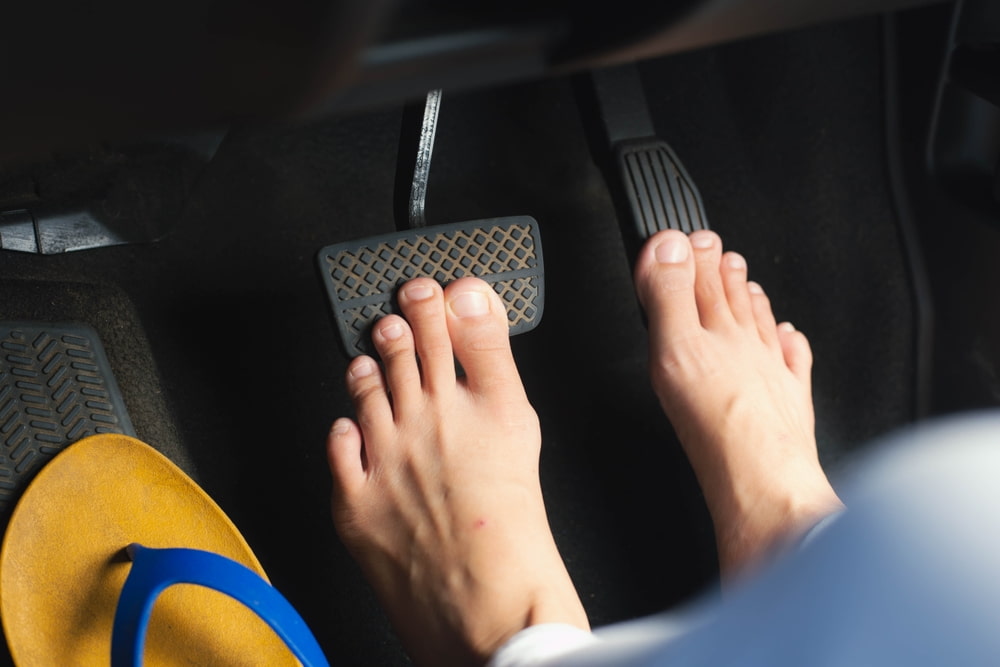
Shoes provide structure, grip, and pressure distribution unavailable with bare feet. Pedal response may feel different without footwear, particularly during sudden braking when reduced control can increase stopping distance and reaction time. During a car accident analysis, investigators often examine whether a driver maintained proper command over acceleration and braking, making footwear choices potentially relevant to liability determinations.
Bare skin against metal or rubber pedals can slip more easily than shoes, especially in wet conditions. Snow, rain, or condensation common in Buffalo winters increases the chance of a foot sliding off the brake, potentially leading to rear-end collisions or intersection crashes. Insurance companies frequently scrutinize these moments when evaluating liability after impact.
A bare foot faces a greater injury risk during a collision from sharp debris, pedal intrusion, or broken glass. Shoes offer minimal protection, yet some protection exists. Injuries sustained this way can complicate a car accident claim when insurers argue that footwear choices contributed to the severity of harm.
No, police cannot issue a ticket solely for barefoot driving. Although many drivers ask if it is illegal to drive barefoot, New York traffic enforcement requires a violation tied to unsafe operation. A barefoot driver who obeys traffic laws faces no citation. However, problems arise when an officer observes careless behavior or loss of control linked to footwear.
During a crash scene, officers document observations. If bare feet appear to affect braking or steering, a reckless driving charge may follow based on unsafe operation, not footwear itself. Buffalo drivers benefit from understanding this distinction before assuming legality equals zero risk.
Yes, barefoot driving can affect legal responsibility and insurance outcomes following a car accident. New York uses a comparative negligence system under Civil Practice Law and Rules § 1411, permitting an injured driver to seek compensation even when partially at fault for a collision. Any assigned percentage of responsibility decreases the total compensation available after a crash.
Insurance companies frequently cite barefoot driving when contending that a driver behaved carelessly. Common claims include:
When an insurer successfully frames these arguments, the driver may be found partially at fault, which can lower financial recovery. These strategies frequently appear in Buffalo car accident claims when insurers seek reasons to limit payouts rather than focus on the conduct that actually caused the collision.
Buffalo Personal Injury Lawyer. Choose the 2’s.
With over 80 years of combined experience, the Buffalo personal injury lawyers at O’Brien & Ford, PC are here to fight for the justice you deserve. Call us today at (716) 222-2222 to schedule your free consultation with one of our top-rated attorneys.
After a collision, protect your health and legal rights by taking these steps:
Taking these steps early protects against unfair blame-shifting and strengthens your negotiating position.
Footwear directly affects vehicle control during everyday driving and emergency situations. Shoes with proper grip and a secure fit help drivers maintain steady pressure on the pedals. Without this stability, bare feet or unstable footwear can slip, delay braking, or interfere with acceleration. These risks intensify in Buffalo, where rain, snow, and ice already challenge driver control. In such conditions, secure shoes provide crucial protection against losing control. Appropriate footwear also limits insurance claims arising from careless driving after a car accident.
After a serious collision, questions about whether it is illegal to drive barefoot often surface alongside medical bills and insurance pressure. O’Brien & Ford supports Buffalo drivers facing these challenges and works to counter arguments blaming footwear choices rather than negligent driving. A focused legal review can clarify fault issues and protect potential compensation. Call 716-222-2222 for a free consultation to discuss your car accident claim and learn how we can help.
Chris O’Brien is a nationally recognized personal injury attorney with over 30 years of experience fighting for accident victims in Western New York. A founding partner at O’Brien & Ford, he has helped recover millions for clients and built a reputation as a top trial lawyer and educator. Chris is a Diplomate of the National College of Advocacy, a member of the Million Dollar Advocates Forum, and was named one of Western New York’s Top Ten Lawyers by Buffalo Business First. He lives in Amherst with his family and their Bernedoodle, Moose.
Years of experience: 33 years
Practice areas: Personal Injury Law, Car Accidents
Location: Buffalo, New York
Avvo | Super Lawyers | Best Lawyers | FindLaw


This page has been written, edited, and reviewed by a team of legal writers following our comprehensive editorial guidelines. This page was approved by Attorney Chris O’Brien, who has more than 33 years of legal experience as a personal injury attorney.
Key Takeaways Injured passengers can sue the driver of their own vehicle, another driver, or both parties. New York's no-fault system pays initial medical costs through the host driver's PIP ...
Posted by Chris O’Brien
Key Takeaways Liability insurance does not cover vehicle damage from hitting a deer in New York. Comprehensive coverage is the only policy type that pays for a direct deer strike. Coll...
read morePosted by Chris O’Brien
Key Takeaways New York requires at least $25,000 per person and $50,000 per accident in bodily injury liability coverage. Bodily injury liability covers medical expenses, lost wages, and ...
read moreGet a Free Case Evaluation
If you or a loved one has been seriously injured, please fill out the form below for your free consultation or call us at (716) 222-2222

 716-222-2222